




The Bible’s Answer
“10 You are to distinguish between the holy and the common, and between the unclean and the clean, 11 and you are to teach the people of Israel all the statutes that the LORD has spoken to them by Moses.” — God addressing Aaron the high priest (Leviticus 10:10–11, ESVUK)
One of the peculiar aspects of the Old Testament is that God prescribed certain foods, actions, and situations as either clean or unclean. Sometimes, the Bible calls things unclean in the sense that they are sinful—that is, morally wrong for all people and all times. Other times, it calls things unclean in the sense that they are only ceremonially or ritually unclean, but not sinful in and of themselves.
Morally Unclean Things for All People
To start with, sin makes a person morally unclean. For example, lying sexually with a close relative (Leviticus 18:6) or your neighbour’s wife (Leviticus 18:20), or a man lying with a male as with a woman, which is called an abomination (Leviticus 18:22), or lying with an animal, which is called perversion (Leviticus 18:23), and sacrificing your children to false gods, which profanes God’s name (Leviticus 18:21), are all sinful actions that make a person unclean (Leviticus 18:24–25).
This is especially clear, since the Bible uses words such as “sin”, “abomination”, or “perversion” in relation to these unclean things. In the following passage, after listing all of the above examples and more, the Lord makes clear that all people are made morally unclean by doing them, and that he sent Israel into the land of Canaan to dispossess the inhabitants because they made themselves morally unclean by doing these things:
“Do not make yourselves unclean by any of these things, for by all these the nations I am driving out before you have become unclean, 25 and the land became unclean, so that I punished its iniquity, and the land vomited out its inhabitants. 26 But you shall keep my statutes and my rules and do none of these abominations, either the native or the stranger who sojourns among you 27 (for the people of the land, who were before you, did all of these abominations, so that the land became unclean), 28 lest the land vomit you out when you make it unclean, as it vomited out the nation that was before you. 29 For everyone who does any of these abominations, the persons who do them shall be cut off from among their people. 30 So keep my charge never to practise any of these abominable customs that were practised before you, and never to make yourselves unclean by them: I am the LORD your God.” (Leviticus 18:24–30)
Ceremonially Unclean Things Only for Israel and Sojourners
Then there is the other sense of uncleanliness, which is ceremonial or ritual uncleanliness—actions or situations that are not inherently sinful, but which made a person temporarily ceremonially unclean until the prescribed cleansing took place.
For example, a woman who gave birth (Leviticus 12:2, 5) or was on her period (Leviticus 15:19), and a man who had a bodily discharge (Leviticus 15:2–3) or an emission of semen (Leviticus 15:16), was also unclean. Even having sex made both the husband and wife unclean until the evening after they bathed themselves in water (Leviticus 15:18). In and of themselves, none of these actions or situations are sinful, but they still made a person ceremonially unclean.
The Old Testament food laws fall into this same category. Deuteronomy chapter 14, for example, gives a list of animals that God’s people could eat, such as the ox, sheep, and goat, and a list of animals that they could not eat, such as the camel, hare, and pig—because while the former were clean, the latter were unclean (Deuteronomy 14:4–8).
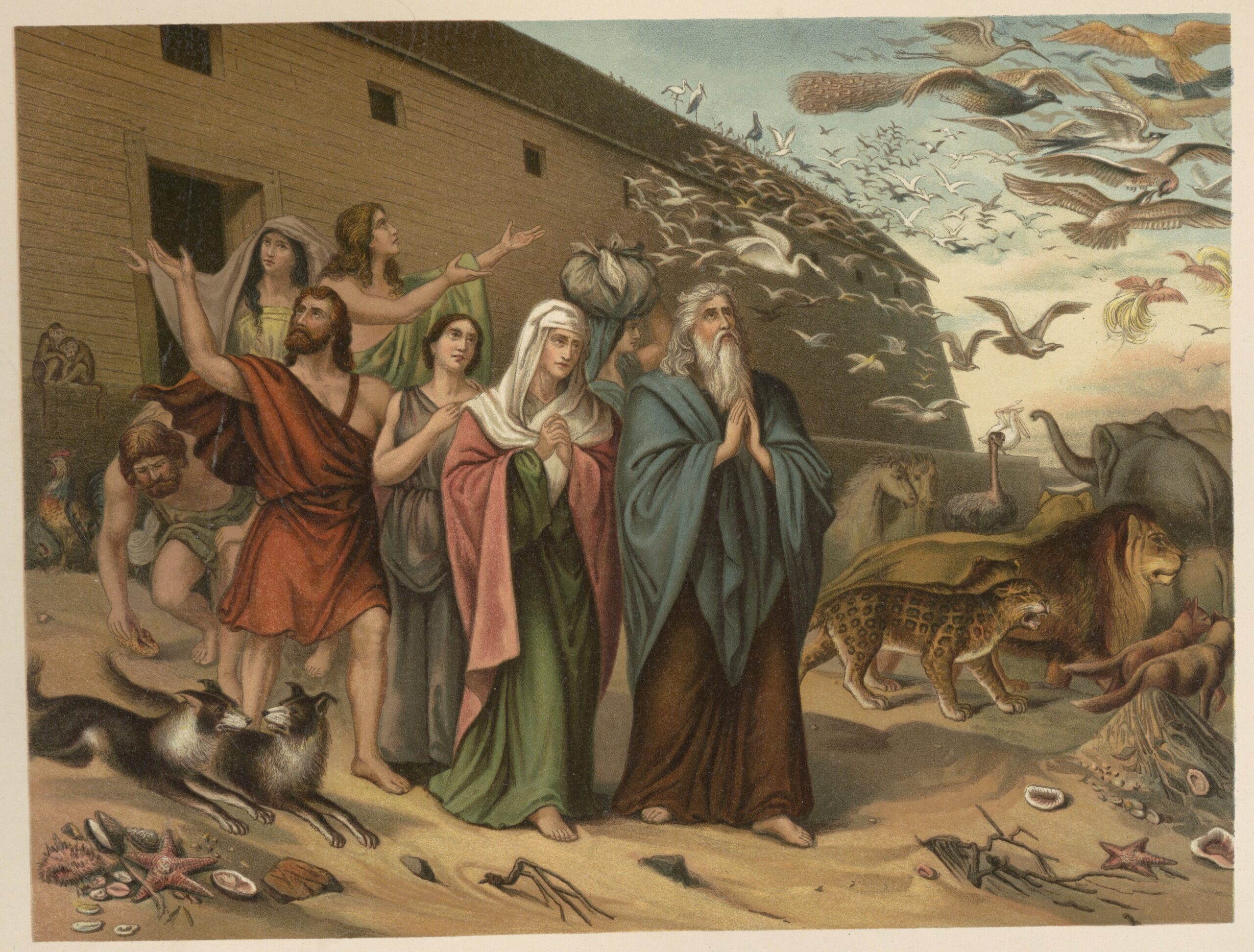
But just like the above examples, such as sex with your spouse or giving birth, animals and plants in and of themselves are not sinful. This is taught in Genesis 9, after God rescued Noah and his family from the flood, when he blessed them (Genesis 9:1) and allowed them to eat all animals for food:
2 The fear of you and the dread of you shall be upon every beast of the earth and upon every bird of the heavens, upon everything that creeps on the ground and all the fish of the sea. Into your hand they are delivered. 3 Every moving thing that lives shall be food for you. And as I gave you the green plants, I give you everything. 4 But you shall not eat flesh with its life, that is, its blood. (Genesis 9:2–4)
The Old Testament ceremonial or ritual cleanliness laws, including the food laws, applied only to the people of Israel, with whom God made his covenant on Mt Sinai, and to a certain extent, all non-Israelites living in the land of Israel as sojourners. These particular laws did not apply to anyone else in the world. Right after God gave the food laws in Deuteronomy 14, God said:
“You shall not eat anything that has died naturally. You may give it to the sojourner who is within your towns, that he may eat it, or you may sell it to a foreigner. For you are a people holy to the LORD your God.” (Deuteronomy 14:21a)
While touching the carcass of a clean animal that died naturally made an Israelite unclean until the evening (Leviticus 11:39), and they were forbidden from eating it, the Lord explicitly allowed sojourners living in Israel and foreigners to eat of it as an exception (Deuteronomy 14:21).
It should be noted, though, that according to Leviticus 17:15, all sojourners living in Israel still had to wash their bodies and clothes if they ate any food that was found dead. So, while non-Israelites were living within Israel, they were still expected to follow some of the food laws, just not all of them to the same extent.
In those days, merely becoming ceremonially or ritually unclean was not itself a sin. However, a person could sin by disregarding God’s commandments concerning ceremonial or ritual uncleanness, particularly by defiling God’s sanctuary while unclean (Leviticus 15:31).
Why Were the Food and Ceremonial Laws Only for Israel and Sojourners?
But why would these food and ceremonial laws only apply to the people of Israel and, to an extent, all foreigners living with them? Again, Deuteronomy 14:21 helps us answer this, when God said: “… For you are a people holy to the LORD your God” (Deuteronomy 14:21a).
The word “holy” does not mean “better” than others—it means “set apart”. God set apart the people of Israel, out of all the peoples in the world, to be “his treasured possession” (Deuteronomy 14:2), and promised that in them all the families of the Earth would be blessed (Genesis 12:3). When Israel sinned against God and became like the pagans, they became a curse to others and themselves; but when they obeyed the Lord and followed him, they became a blessing to other nations.
Ultimately, it was through the people of Israel that the Messiah, our Lord Jesus Christ, would come (Romans 9:3–5), to save the world from sin and its consequences, and bring the ultimate blessings to humanity, beginning from Jerusalem (Luke 24:45–47). Therefore, God wanted the people of Israel to be different from the rest of the world, not only by living godly lives, but even by living everyday life differently.
In this way, pagan nations would be able to see that Israel was different, which would draw their attention to Israel, and then result in them learning about God and his nearness to Israel. In fact, Deuteronomy 4:5–8 tells us exactly why Israel was to follow all God’s commandments, including the moral, food, and ceremonial ones:
5 See, I have taught you statutes and rules, as the LORD my God commanded me, that you should do them in the land that you are entering to take possession of it. 6 Keep them and do them, for that will be your wisdom and your understanding in the sight of the peoples, who, when they hear all these statutes, will say, ‘Surely this great nation is a wise and understanding people.’ 7 For what great nation is there that has a god so near to it as the LORD our God is to us, whenever we call upon him? 8 And what great nation is there, that has statutes and rules so righteous as all this law that I set before you today? (Deuteronomy 4:5–8)
Why Were Certain Things Ceremonially Clean, But Others Not?
When it comes to why certain things were ceremonially clean, such as the ox, while others were not, such as the camel, we may never know. The Bible does not explicitly tell us why each particular animal or circumstance was classified as clean or unclean.
Several interpretations do exist. One interpretation says that many of the things that made a person ceremonially unclean were linked with death or mortality to some degree—for example, loss of blood or other bodily fluids, certain diseases or bodily conditions, and contact with the dead. God is life, and according to this view, ritual cleanliness symbolically pointed Israel toward life with God rather than death (Deuteronomy 30:20).[1]
Another interpretation is that the distinction between clean and unclean animals could be related to Israel’s identity and God’s redemptive work. According to this view, for example, the inclusion of domesticated animals among Israel’s permitted foods could reflect Israel’s identity as the Lord’s flock (Ezekiel 34:22, 31), while the exclusion of carnivorous scavengers could reflect Israel’s commands to avoid touching carcasses or ingesting blood (Leviticus 11:8, 39–40; 17:10–14).[2]
Another interpretation is that ceremonial uncleanliness served as a picture or reminder of sin. Many ordinary circumstances of life could make a person unclean, so their only hope was not simply to avoid uncleanliness, but to be delivered from it. This reminds us that sin deeply affects our lives, and that therefore we must depend entirely on the grace of God to be cleansed and forgiven (Ezekiel 36:25–27; Psalm 32:1–5).[3]
Those interpretations are possible, but not confirmed by Scripture. Ultimately, the food and ceremonial laws of the Old Covenant were closely connected with Israel’s holiness and the correct and proper worship of God. Therefore, they teach us an important lesson for today: God is to be worshipped and served on his terms, not ours, even when we ask “Why?” A clear example is found in Deuteronomy 12, which contains God’s instructions to the people of Israel about worship:
3 You shall tear down their altars and dash in pieces their pillars and burn their Asherim with fire. You shall chop down the carved images of their gods and destroy their name out of that place. 4 You shall not worship the LORD your God in that way. 5 But you shall seek the place that the LORD your God will choose out of all your tribes to put his name and make his habitation there. There you shall go, 6 and there you shall bring your burnt offerings and your sacrifices, your tithes and the contribution that you present, your vow offerings, your freewill offerings, and the firstborn of your herd and of your flock. 7 And there you shall eat before the LORD your God, and you shall rejoice, you and your households, in all that you undertake, in which the LORD your God has blessed you. (Deuteronomy 12:3–7)
The Israelites may not have known why God chose a particular place in their tribes to make his dwelling place, or why certain offerings were prescribed, or why certain things were ceremonially clean or unclean—but they were still called to trust in him, and follow his commandments.
Likewise, we may not fully understand why God has given us certain instructions or commandments in the New Covenant, but we are still called to trust that he knows best, and to follow his commandments (John 14:15). Our ways will fail us, but God’s ways are always the best ways (Psalm 18:30; 86:11; 128:1).
Jesus Fulfilled the Food and Ceremonial Laws
All of the food and ceremonial laws served to prepare the way for Jesus, who by his perfect obedience to the Law of God, sacrificial death, and resurrection on the third day, fulfilled the food and ceremonial laws of the Old Covenant that served to point to him (Matthew 5:17; 1 Corinthians 15:3–4; Colossians 2:16–17). This was why Jesus could make the shocking statement to his fellow Jewish listeners that nothing going into your body from outside can truly defile you:
18 … Do you not see that whatever goes into a person from outside cannot defile him, 19 since it enters not his heart but his stomach, and is expelled?” (Thus he declared all foods clean.) 20 And he said, “What comes out of a person is what defiles him. 21 For from within, out of the heart of man, come evil thoughts, sexual immorality, theft, murder, adultery, 22 coveting, wickedness, deceit, sensuality, envy, slander, pride, foolishness. 23 All these evil things come from within, and they defile a person. (Mark 7:18b–23)
Because Jesus fulfilled the Law, and God’s people now live under the New Covenant (1 Corinthians 11:25), today no one is under the food or ceremonial laws of the Old Covenant. This is made clear in the book of Hebrews, which says about the Old Covenant:
9 According to this arrangement, gifts and sacrifices are offered that cannot perfect the conscience of the worshipper, 10 but deal only with food and drink and various washings, regulations for the body imposed until the time of reformation (Hebrews 9:9a–10).
Because of the New Covenant, the Old Covenant has become “obsolete” (Hebrews 8:13). As Mark says, Jesus “declared all foods clean” (Mark 7:19). No one today is either ritually clean or ritually unclean in the Old Covenant sense. No food, no life-saving medical procedure such as blood transfusions, and no tragic circumstance can make us unclean—because all these come from outside of us.
The only thing that can truly make us unclean in the moral sense, as Jesus says, is our sin, which comes from within our heart. And the one and only thing that can cleanse us from our sins is the blood of Jesus, which he shed for us on the cross, that whoever believes in him will not perish, but have everlasting life (John 3:16–17).
7 But if we walk in the light, as he is in the light, we have fellowship with one another, and the blood of Jesus his Son cleanses us from all sin. 8 If we say we have no sin, we deceive ourselves, and the truth is not in us. 9 If we confess our sins, he is faithful and just to forgive us our sins and to cleanse us from all unrighteousness. (1 John 1:7–9)
See Also
- How to Go to Heaven
- Why Did God Command the Israelites to Destroy the Nations in the Land of Canaan?
- Does the Bible Prohibit Blood Transfusions?
- Do We Have to Keep the Sabbath?
References
[1] Bromborough Evangelical Church, “Fit for God – Leviticus 11–15,” accessed 20 August 2026. https://b-e.church/fit-for-god/.
[2] Christine Palmer, “Why Were There Such Strict Dietary Laws in the Old Testament? (Leviticus 11),” Crossway, 19 January 2026. https://www.crossway.org/articles/why-were-there-such-strict-dietary-laws-in-the-old-testament-leviticus-11/.
[3] Benjamin Shaw, “Clean and Unclean,” Ligonier Ministries, 25 September 2014. https://learn.ligonier.org/articles/clean-and-unclean.